
A Discussion About Making And Showing Independent Films In The United Arab Emirates
On June 14, Bayt Al Mamzar screened a film program titled Indie Shorts which was organised and curated by Abdulrahman Al Madani, it included six short films by Emirati directors including his. The program has been shown at a handful of other venues in the country, and I was invited to moderate a post screening discussion for this one.
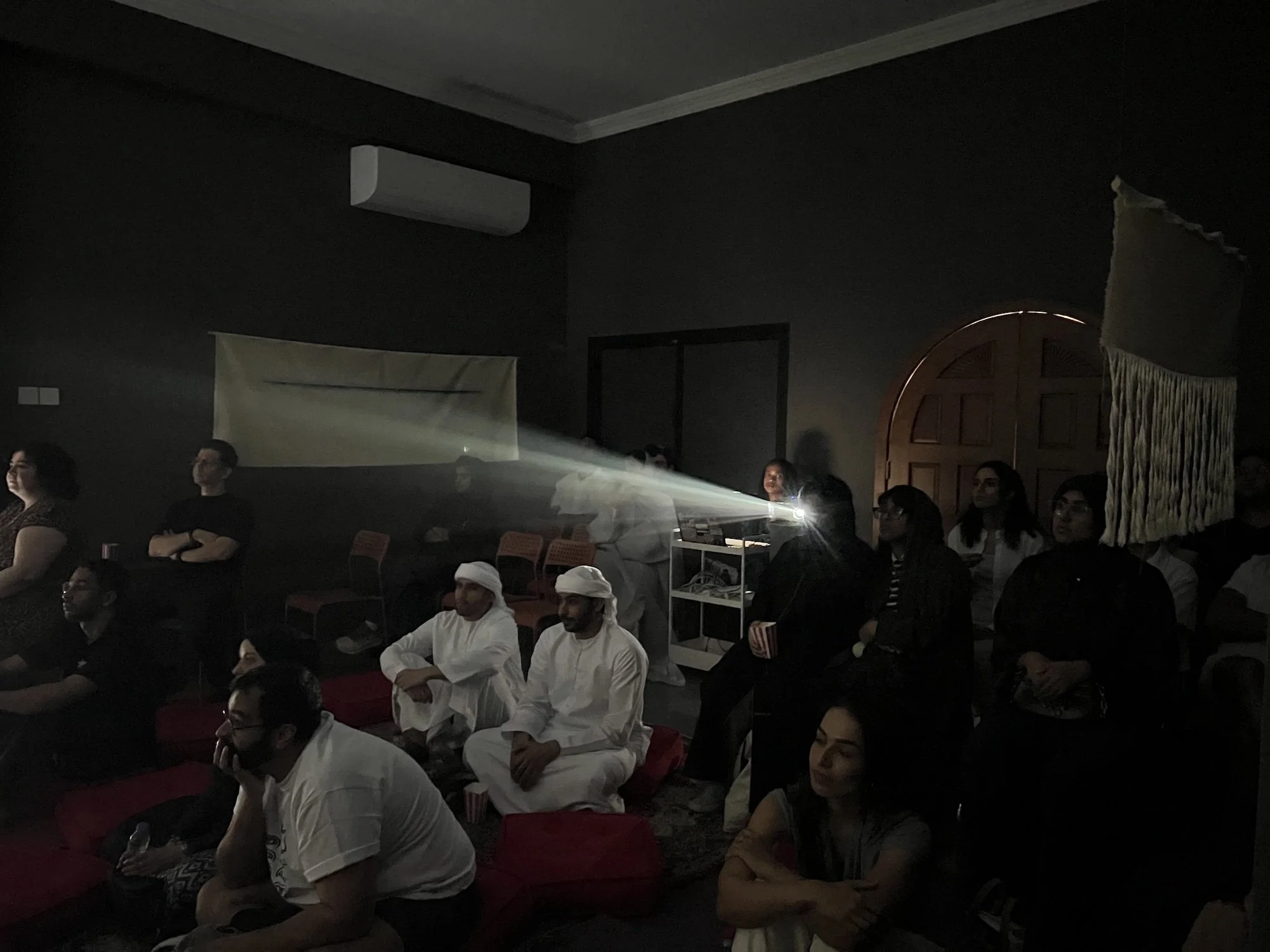
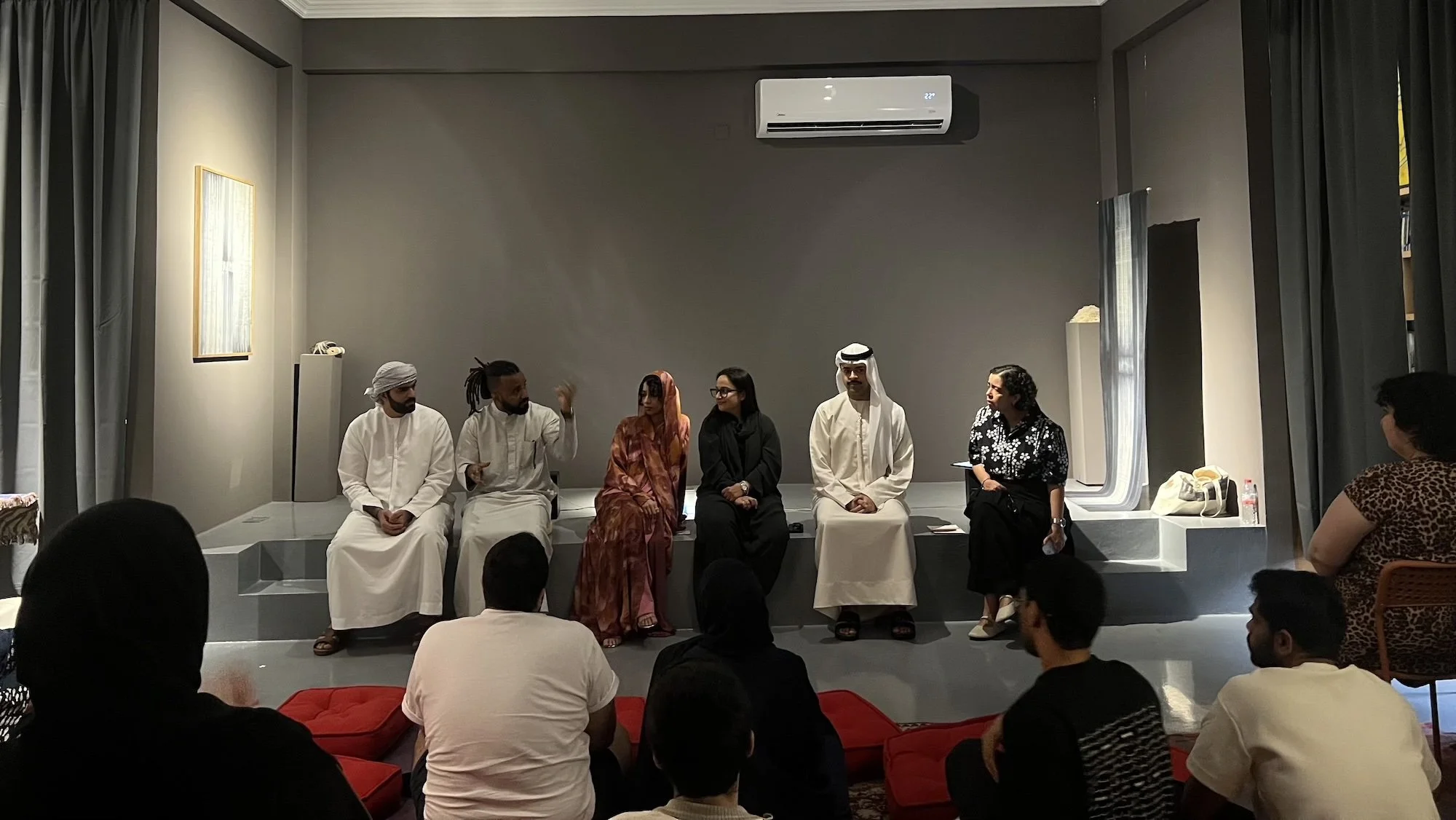
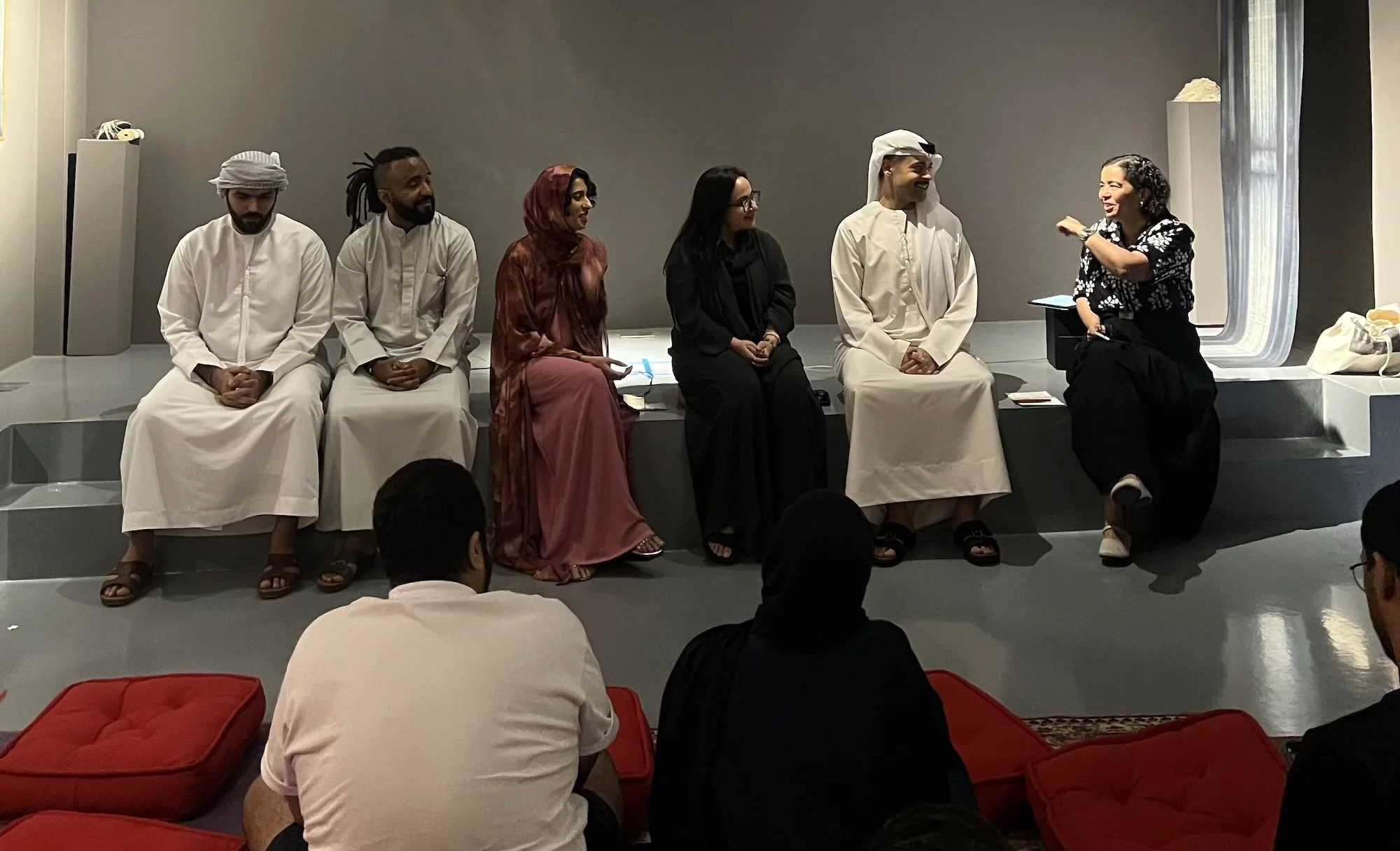
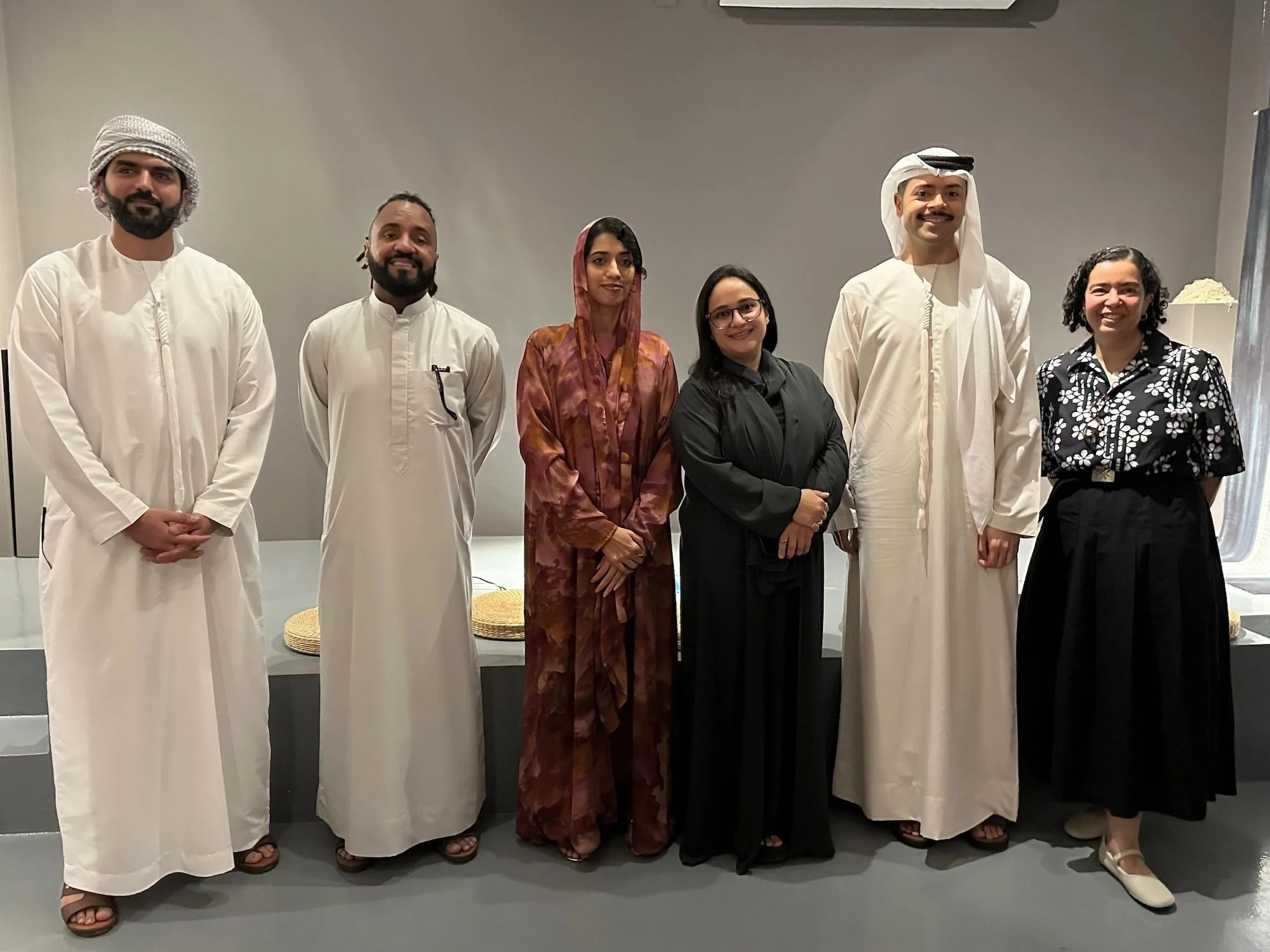
Photos courtesy of Abdulrahman Al Madani and Bayt Al Mamzar.
I was happy to have the opportunity to ask them about their films, and discuss what it's like to make films independently, and to try showing them to an audience in the UAE. Only five of the six filmmakers were present for the discussion. I got their permission to record our talk, to transcribe it for the blog. The conversation took place in English and Arabic.
The following is a condensed version our discussion split into two parts. It has been edited for length and clarity, and translated into English accordingly.
PART 1 - I started the discussion by asking each one a question about their film. The following is an excerpt from each answer, and you can find the synopsis for each film here.
Thabit Al Mawaly, director of NOOR on what inspired the film:
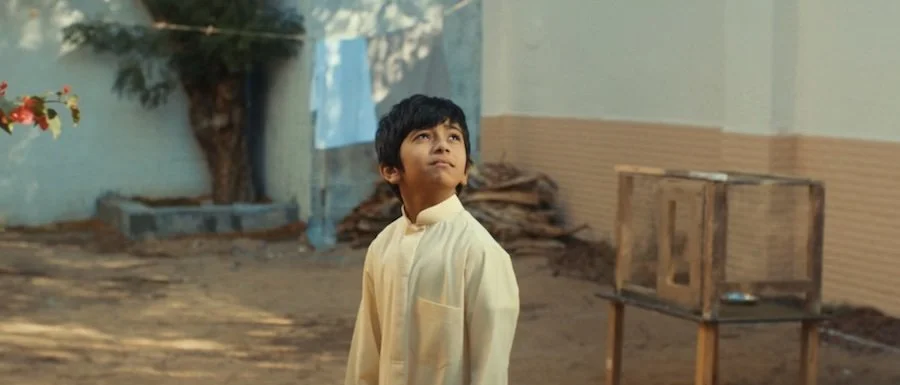
The film was inspired by my childhood. I think pigeon keeping is a lost art, a lot of people used to do it back in the day. I have memories where certain people in my neighbourhood valued their pigeons more than their own kids.
I draw a lot of inspiration from my life in my stories, and to an extent I was like the boy in the film, I only had one pigeon and not a bunch of them like one of the kids in the film. I thought it would be a good story, especially with pigeons being creatures that return to you. So I really liked that idea, and it symbolised something for me personally.
Mansour Ahmed, director of UNSAID on the suspense and mystery in his film:
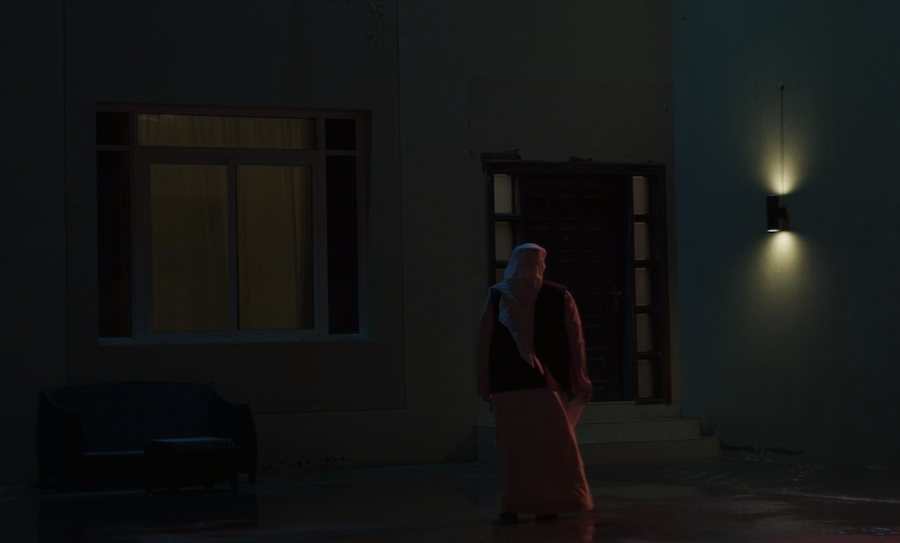
The idea came from Zayed Faisal who wrote the script. When he showed it to me, I liked the twist ending. When I saw the film would need a limited crew and location, I agreed to work on it. The idea was difficult to implement, and it was honestly a challenge for me. It is confined within four walls, how can I tell this story and for viewers to stick with it till the end. I cast Yaser Al-Neyadi and Fares Al Jadawi, and I think their performances are great.
Hana Kazim, director of YATHOOM on the visual style of the film:
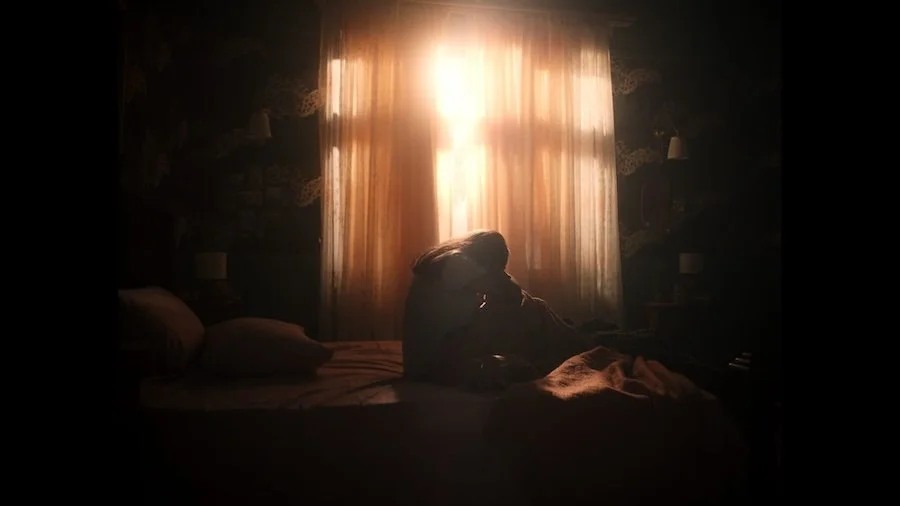
In my previous short film (MAKR), I concentrated on the story. This time I wanted to concentrate on the aesthetics. I did not want to shoot it until I found the right cinematographer. Charlie Cole has a specific style and when we talked about the film and our movie references, I understood that his philosophical outlook was similar to mine, in terms of the direction of this film. I think moving forward I’d like to cast a DoP just like I'm casting an actor - because it's about the philosophical message of the film, so the entire team involved need to understand that.
Sarra’a Al Shehhi, director of A SMALL DREAM on how she feels watching and looking back at a film made in 2021:
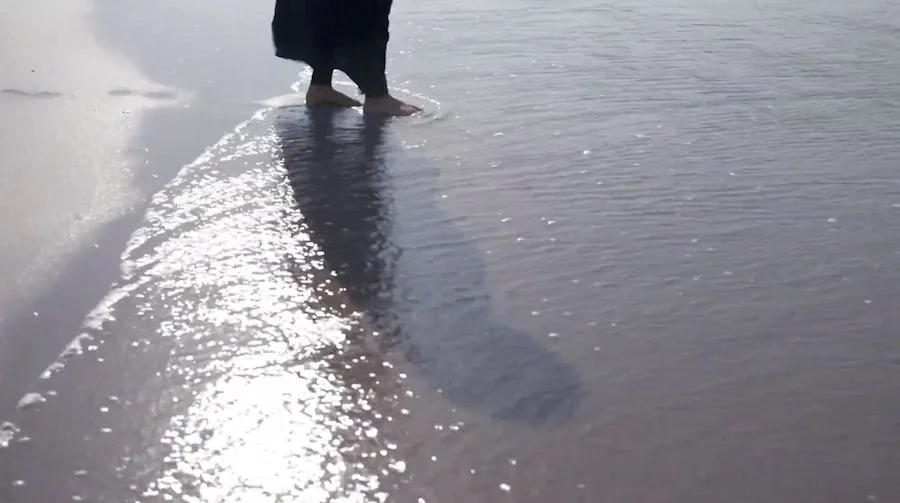
I feel this is the most gentle work I've done, in terms of style and what I was trying to say. It expressed how I was feeling at that time, how I was observing the world. I appreciate my past self, and it’s time to move on. I can disconnect from it now, but at the time - the idea of small dreams wasn’t just about wanting to swim in the sea, but about people who experience life differently. Even if they’re exposed to the same opportunities, they have their own specific limitations.
Abdulrahman Al Madani, director of OUG on why he chose IKEA as a location for the film:
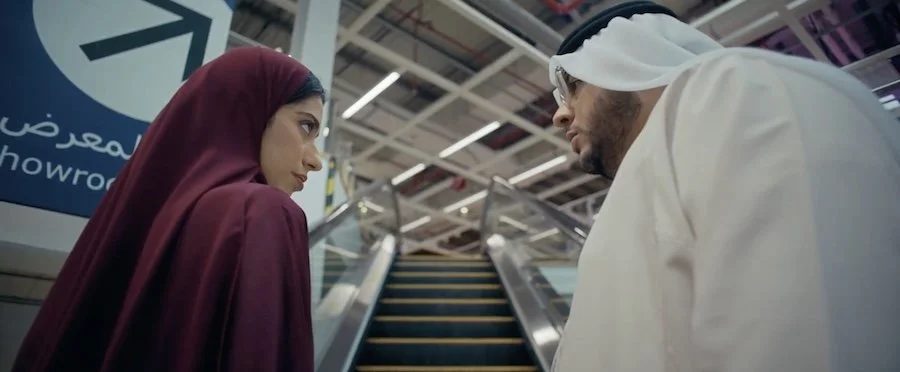
I wanted the couple to be trapped in one place, whilst in the middle of having an argument. I've been to IKEA many times and have seen couples arguing. There is something intimate about picking furniture as a couple - but after seeing couples fighting, an idea got stuck in my head. What if they’re stuck in one place, and they also have to buy a gift as they keep arguing?
———————————————————————-
PART 2
For the second part we talked about what it takes to make films independently here, funding, support from peers and institutions, theatrical releases for Emirati films, and not enough cultural venues in the country interested in showing their films, and the very limited occasions and last minute requests when there is interest.
Hind Mezaina: How do you define independent filmmaking in the UAE?
Mansour Ahmed: I used to attend film festivals here and a lot of what I watched inspired me to make films. At that time there were a couple of film funding bodies and platforms where we could share our films and get feedback on how to improve our filmmaking skills for our next projects. There was a spirit of support and funding. When these festivals stopped, local filmmaking collapsed and caused a state of depression for us filmmakers. But lately, filmmakers are returning to make films, and there's a new wave of Emirati cinema that is collaborative. As you saw in these films, we’ve collaborated on each other’s films as cast or crew and I see this as a model in addition to getting external funding. I got funding from Ras Al Khaimah Art Festival, Hana got funding from the UAE National Grant.They are small amounts, but it doesn’t mean we spend less time working on our films. We still have to network and tell people we have a project and if they believe in it, to support it anyway possible. So this is one of the ways to make films independently, collaborate with people you find around you.
Hana Kazim: I agree with that completely. We've seen the previous generations help each other, and let people from their generations make films. But we haven't seen a person from one generation help the upcoming generation, and I think this is what needs to change for us to be able to have a thriving independent cinema scene. It's about what I know now and what can I teach someone who is just getting into the industry? What can I do to help them as well? What connections do they need, because you never know which generation is going to be the one that actually breaks this mould we have. I think this is the new process of how our generation can help the next one, whilst we’re still trying to figure out our own careers. The current generation have grown with cameras in their hands and already have an easier understanding of how to film and edit.
People need to understand that we as independent filmmakers make no money from our films, in fact we spend on our careers till we reach a zero balance and then we have to figure out how to make and raise money for three years so that we go back to zero again. We are doing this because we are passionate about it, but there are no financial gains. It's rewarding because we finally get to tell our stories.
Thabit Al Mawaly: I’m a big believer in low-budget filmmaking. I try my very best to not spend too much money on production. I think we're very blessed in this day and age that we can make films with very little. I started off as a YouTuber. I used to make a lot of YouTube content and do everything myself - solo camera operator, shooting, directing, editing. So in my head, it doesn't need to be a whole complicated ordeal. But I do believe there is a real benefit to working and collaborating with different artists on a project. If you work with a talented DOP, art director, composer, editor, you create something that you would never be able to do on your own. I do my commercial work on the side to make money and keep it separate from my personal filmmaking projects.
HM: Have any of you applied for international funds or participated in film development workshops? I’ve heard applicants from the Gulf don’t get selected because it is assumed they already have money and support. So for UAE filmmakers there's not enough financial or professional support locally, and hardly any support internationally because of certain misconceptions.
Hana Kazim: I've applied to many of those, and most of them actually don't have the UAE on their list. Or they have specific stories that they want us to tell.
HM: That’s the other problem, an expectation that films from our region should be about certain social issues. The other challenge you face, where else can you show your films, especially shorts, besides at film festivals. Even if you do find venues, you have to get permits, media council approvals and/or pay certain fees, another cost you are burdened with. How was it trying to organise screening these films at different venues?
Abdulrahman Al Madani: This screening at Bayt AlMamzar has been the smoothest one thanks to the team working here. I've seen these films separately at different festivals, and I asked myself why don't we have a film night where all these films are shown together. I was surprised to find out a lot of venues in the UAE were not interested. I found it strange, why can’t I show my film here? I've been to the US, Denmark and many other festivals abroad with my film. The only screening in the UAE this year was at the Ras Al Khaimah Art Festival. I wondered why no one else wanted to show the films. Why is there no space for Emirati films, and why do I and the other filmmakers have to fight to be visible?
HM: When it comes to Emirati shorts or features, certain venues seem to only be interested in showing them when it's National Day or Emirati Women's Day. It’s very tokenistic and a kind of othering. Even a recent event dedicated to Arab films didn’t have a single film from the UAE. It sidelines your work and your creativity if your films can only be shown for national representation. How can this be changed?
Mansour Ahmed: Like you said, they categorise the films for events like Emirati Days or National Day, and the problem is with the people who select the films, they want to group films about certain causes - humanitarian, political and so on. I think there is a difference between Emirati films and the other films from the Arab region - we still need to speak about our stories, our generations, and we need time for that. Film selectors need to understand that and show our films under different categories and themes.
Hana Kazim: My biggest concern recently has been how the theatrical release of Emirati features are treated in cinemas. While shorts can be considered as a business card for filmmakers to show people what they can do, a feature is meant to make money. Unfortunately, we need to train our audiences to go to the cinema to watch an Emirati film. There are not enough financial incentives for the cinema chains to show them. Unlike many other countries, like in the US, in France, in the UK, all of those places have independent cinema chains. They could make a deal with independent producers to show their films, and that's how an independent scene can thrive. In the UAE, we have no independent theatres, apart from one and it barely shows Emirati films. We also need the big cinema chains to take our films more seriously. There needs to be a rule to show them for a longer period to give them a chance, because it takes time to build word of mouth to get an audience. We don't have the marketing budgets like the big studio films.
HM: Do you think a policy can be developed to show your films at arts and culture institutions. Many have auditoriums or screening spaces that are underused. I always wonder why can’t these spaces be used to show and support your films, even as ticketed screenings.
Sarra’a Al Shehhi: It's the job of the curator and programmers in these spaces to see the value of the work, what it means to current times, the future, and how it will become part of the country’s cultural archive, and the that our voices are as important as the other artists they show. If they acknowledge the fact that independent films exist here, that’s a success on its own. That they are considered good, they don't have to be great, is also a success, because it means they are watchable. It means they can be communicated to an audience. Curators are responsible to connect the art with their audience, and our goal as filmmakers is to communicate with an audience. Another responsibility that should be considered in these spaces is to plan ahead and schedule screenings on weekends, or after work hours during the week. It’s an indication of how much they care about our work getting seen and experienced.
Abdulrahman Al Madani: And not to get contacted two days before UAE National Day to request to show our works.
Sarra’a Al Shehhi: It is toshow respect, and not being a wasted or missed opportunity to show our films. I recall the Dubai International Film Festival used to slot the Emirati films in the middle of the day, while other films, including films from the rest of the Gulf region, were shown during better hours. This was around 10 years ago, and this mentality hasn’t evolved. The films are evolving, the talents are evolving, and new voices are going to keep coming. Let's just hope we are given opportunities to connect with audiences, and also somehow make money so we can sustain ourselves. Independently, we've been able to create, to study, to learn, to help each other, to actually make our films, and then there's the final step, which is to reach the audience. It is interesting that even this we are doing independently because many of these institutions are not seeing the value of Emirati stories.
Thabit Al Mawaly: Over here people want results - not tomorrow, not next week, they want it yesterday. If they invest in something they want something in return immediately. Maybe at first the results are not great, they decide to no longer support it. Over here, they start and stop, start and stop. Different teams are assigned and within that people come and go and relationship building has to restart again and again. There’s no continuity or consistency.
Sarra’a Al Shehhi: I also want to add, it’s not our job to be making policies. I think the more we focus on making our films and try to reach our audiences - a lot of people have come here and there was a waiting list which indicates there’s interest. So it's already us doing the work without saying anything. When someone makes a short film and tries to show it on their own, they’re in a slightly weak position. But when we all screen together and work together, it's already attractive for cultural institutions. So that's already a solution. Whether we have funding or not, have film festivals or not, we're making our films, even if we use our creativity on problem solving more than filmmaking.
HM: Would anyone like to share what they’re working on next?
Hana Kazim: I started a company called Wiswas which supports the development of Arab horror. I think every region has its own horror language - we’ve seen Japanese horror, Indian horror, French horror. We don't yet have a language that defines Arab horror, and I think that's because it's very much tied to the culture of faith and about what scares us. We're not scared of the monster in the closet. We're afraid of what the monster in the closet being there means. So, that's something we need to work on. I think there are countries already exploring this, Indonesia has a huge horror scene in terms of Islamic horror, Turkey has one too, and I think we can have that too. Making horror films that are mimicking Hollywood is fine as an inspiration, but we need to get to the core philosophy of horror to understand what is going to change here. So that's what I do now with Wiswas.
Links to each filmmaker:
Abdulrahman Al Madani
Hana Kazim
Mansour Ahmed
Sarra’a Al Shehhi
Thabit Al Mawaly