
Cairo Station Tops the 100 Greatest Arab Films of All Time - A New List by Arab film & Media Institute

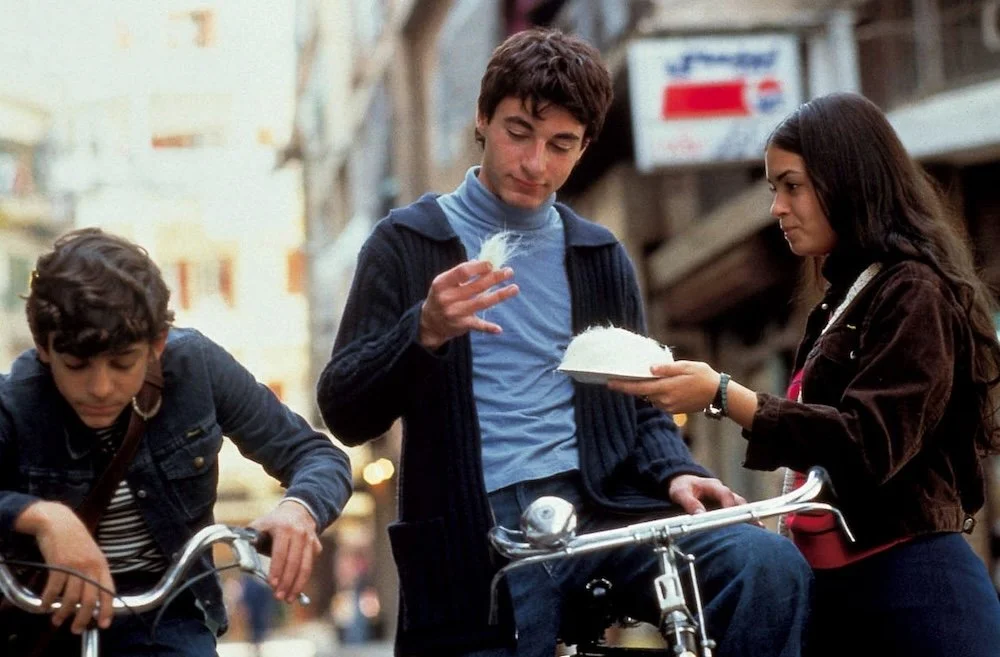
Still from Ahlam Hind we Camilia / Dreams of Hind and Camilia (Mohamed Khan, 1988, Egypt)
In December 2024, I received an email inviting me to participate in a new poll, to vote for The 100 Greatest Arab Films of All Time. It was sent on behalf of the Arab Film and Media Institute (AFMI), a US-based non-profit organization founded by the team behind the largest and oldest independent Arab Film Festival in North America.
The email was sent by Eman Ibrahim, in it she explained the poll would be published in the first edition of Cinemayaat, launched by AFMI with Ibrahim as the Editor-in-Chief, a digital magazine dedicated to growing the profile of cinema from the Arab world “through personal or experimental essays and industry interviews, encouraging thoughtful analysis and engagement”.
The poll should include films from the Arab world, the Arab diaspora, and/or depicting Arab narratives (film may be in any language). Only narrative feature films would be eligible, documentaries and short films would not be included.
Twelve years ago, in November 2013, the first Top 100 Arab Films was published, DIFF's The 100 Greatest Arab Films, compiled by Dubai International Film Festival, and was accompanied by a book titled Cinema of Passion. Sadly, DIFF ended in 2017, its website disappeared, and any hopes to maintain this list, like BFI’s Sight and Sound Greatest Films of All Time poll that happens every 10 years, disappeared.
I’m glad AFMI decided to “carry on the torch” as explained by Eman Ibrahim in her Editor’s Note: Inside The Greatest Arab Films Of All Time Issue:
“From mainstream media, to mainstream cinephile culture, even to my family and friends who were born and raised in the region, Arab cinema is not as well-known or revered as cinema from the Western world. There is a stark lack of visibility for Arab stories, with films buried underneath thousands of other titles on streaming services, receiving limited promotion or distribution, and hardly any exaltation from major entertainment outlets. In the near 100-year history of the Oscars, less than twenty Arab films have been nominated for the Best International Feature award, and no Arab filmmaker has ever received the prize; outlets that distribute, preserve and restore world cinema have consistently overlooked Arab film — 2022’s BFI Sight & Sound Top 250 list came and went, and once again, Arab filmmakers were entirely absent.
It was then, after the genocide in Gaza began in October 2023, that a sense of urgency began to settle in for me. It was no longer an option to wait for mainstream recognition from Western institutions; Arab stories needed to be told, heard, and exalted, by us and for us. Arab filmmakers and storytellers needed to be uplifted, and solidarity throughout the Arab world needed to be immediate and loud. It was with all this and more in mind that the Arab Film and Media Institute’s 100 Greatest Arab Films of All Time list began to take shape.
The first major effort of this kind was conducted by the Dubai International Film Festival in 2013; much has changed in the decade-plus since. To carry on the torch, AFMI’s 100 Greatest Arab Films of All Time list offers an updated canon of the best narrative feature films the Arab world has to offer.”
Voting took place between December 2024 and April 2025, and included critics, academics, curators, programmers, archivists, lecturers and select filmmakers of Arab descent, to allow for the list “to be as authentically ‘Arab’ as possible, straight from the source of those who live and breathe Arab arts and culture.”
A video teaser was released on October 24, and between November 28 and December 18, the top 100 was revealed over 6 weeks. Starting from 100, 20 films were revealed weekly in the first four weeks, and the last two weeks featured 10 films each, leading to number 1.
This is the top 10, and I’ve included links to the commissioned essays for each film:




Cairo Station (Youssef Chahine, 1958, Egypt)
Cairo Station: The Greatest Arab Film of All Time by Wael KhairyThe Night of Counting the Years (Shadi Abdel Salam, 1969, Egypt)
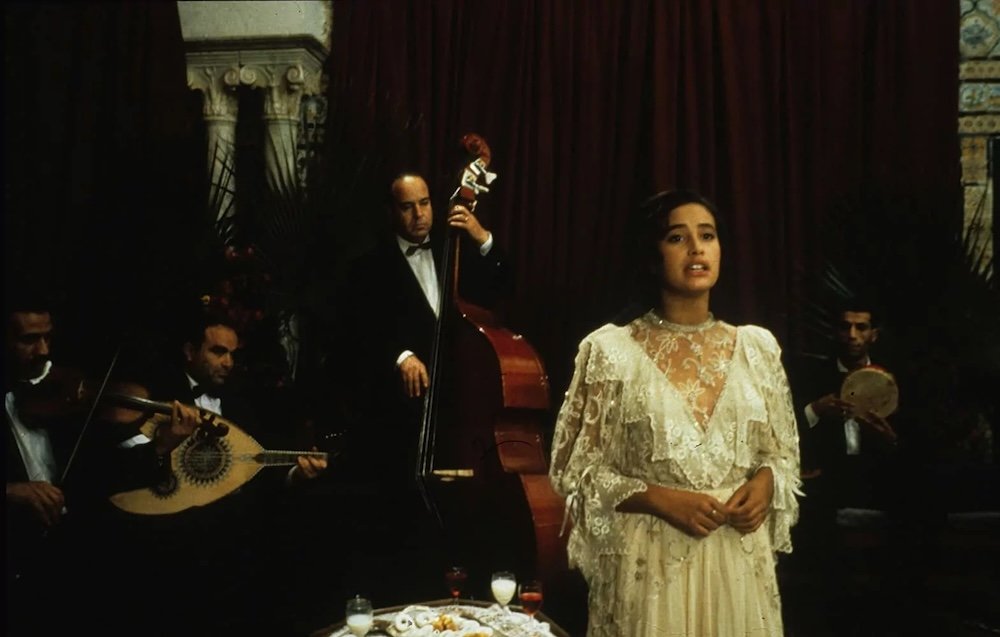
A Unique Work in and on History by Viola ShafikWest Beirut (Ziad Doueiri, 1998, Lebanon)
The Refusal to Surrender to Despair by Chafic TabbaraThe Silences Of The Palace (Moufida Tlatli, 1994, Tunisia)
The Unraveling of Girlhood in a World of Uninnocence by Yasmine ZohdiDivine Intervention (Elie Suleiman, 2002, Palestine)
A Mirror for the Grand Human Condition by Joseph FahimThe Land (Youssef Chahine, 1970, Egypt)
A Poignant Representation of Egypt’s Political History by Rowan El ShimiThe Time That Remains (Elie Suleiman, 2009, Palestine)
Chronicle of a Present-Absentee by Alexa FiratThe Dupes (Tewfik Saleh, 1972, Palestine)
The First Film of the Palestinian Revolution by Saleem AlbeikKit Kat (Daoud Abdel Sayed, 1991, Egypt)
The Blind Man Who Claims to See All by Hazem FahmyCaramel (Nadine Labaki, 2007, Lebanon)
A Transformative Moment for Lebanese Cinema by Marie-Louise Elia
You can see the complete list here, and there are capsule reviews for the rest of the films written by some of the participating voters. I contributed text for Adrift on the Nile (Hussein Kamal, 1971), ranked 46 in the list.
This was my top 10 list, in alphabetical order:
Adrift on the Nile (Hussein Kamal)
Cairo Station (Youssef Chahine)
The Cruel Sea (Khalid Al Siddiq)
The Dupes (Tewfik Saleh)
The Land (Youssef Chahine)
The Silences of the Palace (Moufida Tlatli)
Stars in Broad Daylight (Ossama Mohammad)
Theeb (Naji Abu Nowar)
Under the Fig Trees (Erige Sehiri)
Wedding in Galilee (Michel Khleifi)
In 2013, Shadi Abdel Salam’s The Night of Counting the Years aka The Mummy was number 1, followed by Youssef Chahine’s Cairo Station.
Eight films from the top 10 in 2013 are repeated in the new list.
Overall, 53 films from the 2013 list are repeated in the 2025 list.
The oldest film in the new list is from 1958 (Cairo Station). In 2013 the oldest film was from 1939, The Will / El Azima (Kamal Selim, Egypt) ranked 63.
Additional stats from the 2025 list, courtesy of AFMI:
100 films, 20 by women directors
Most represented countries: Egypt (40 films), Palestine (15 films), Tunisia (13 films)
Most prominent decades: 2010s (22 films), 1980s (15 films), 2020s (14 films)
Directors with the highest number of films:
- Youssef Chahine (7)
- Elia Suleiman (4, all of his movies)
- Annemarie Jacir (3; this list was voted on before Palestine 36 was released, so all of her films that were available at the time of voting)
- Nadine Labaki (3, all her movies)
- Mohamed Khan (3)
- Salah Abu Seif (3)
I reached out to Eman Ibrahim to ask her a few questions about compiling this list and shared a few thoughts too. Here’s the interview:
How many were invited to vote, and how many responded?
My initial invite list had around 500 names. As the voting began more names were added, so I believe it hit somewhere around 700. It was mostly over email, and we also contacted the heads of various critics organizations (FIPRESCI, Arab Cinema Center’s critics group) to help spread the word. When we didn’t have an email, I would reach out to critics and curators via Instagram. I must’ve sent 200 DMs. In the end, just over 250 people sent in their votes. It’s a smaller sample size than the DIFF list, but I mostly chalk that up to the Arab Film and Media Institute being based in North America, and not as present in the Arab region as DIFF was when it was active. I was very insistent that critics directly from the region participated, and in my correspondence I found myself introducing AFMI, Cinemayaat, who we are, what we do, a handful of times.
What's the breakdown of countries where voters participated from?
Before initial invites were sent, when I was curating the voting body, I kept track of which voter was from where. It started off with a lot of Egyptian, Lebanese and Palestinian critics. I would spend a lot of time researching and looking for other potential voters from less represented countries to even everything out. At some point I found myself on page 4 of Google looking for film critics from Iraq, or searching ‘North African cinema’ on JSTOR, seeing who the researchers were and if I could find their contact information. Overall we had voters from Egypt, Palestine, Lebanon, Morocco, Tunisia, Algeria, Libya, Bahrain, Qatar, Saudi Arabia, Jordan, UAE, Sudan, Kuwait, Syria, Iraq, including the diaspora, so Arabs based in the US, UK, Australia, France, Canada.
Will a list of all voters and the films they voted for be shared online?
We’ll see! We’re planning to release bonus content this coming year anyway.
There are lots of similarities between the DIFF 2013 list and the AFMI 2025 list? Any surprises?
I’m not too surprised about the results, I felt it was a pretty accurate reflection of the conversations people have been having about Arab cinema for the past couple years. I knew Capernaum would rank highly, The Blue Caftan, You Will Die at Twenty, etc, though I did raise my eyebrows when Theeb ranked as high as it did; I love that film, but wasn’t aware it was such a consensus pick. The only films that come to mind that I’m shocked didn’t make it were Boy From Heaven, and some of the classic titles from the 50s/60s.
Cairo Station seems to have been watched a lot more in cinemas over the past eight years, mostly I think because of its restoration and the touring Youssef Chahine retrospective, so I am not surprised it took the number 1 spot. What are your thoughts?
It feels like kismet that Cairo Station ranked number 1; around the time I was curating the list of voters, a handful of Chahine films became available on the Criterion Channel, and there were so many sudden retrospectives of his work. It only feels right that it ended up topping the list, as if cementing its legacy. I will say that for the first half of voting, The Night of Counting the Years had a slight lead over Cairo Station. They switched positions a few times, but in the last few weeks Cairo Station took the lead and kept it.
For the 2010s and 2020s as the most prominent decades, I'm wondering if it's because of a recency bias by the voters. I'm also wondering how many older films have the voters watched or remember, and is it the lack of Arab repertory screenings compared to American/European/Asian repertory screenings, and also a lack of availability on most of the streaming website that explain why there aren't more films from the first half of the 20th century in the list.
I definitely think there is a slight recency bias, particularly with the 2020s, although I think if this poll was done again in another 10 years, films like To a Land Unknown and Goodbye Julia would still get recognized. Cinephile culture is also very different now, as is the prominence of Arab filmmakers, and a lot more Arab films get tapped at major film festivals than they did, say, 20 years ago. And just by virtue of so many of the older films being inaccessible, they just cannot be remembered in the same way. That’s why I was so delighted to see films like Nahla, A Door to the Sky, and Beirut the Encounter on the list. These films were released in the 20th century and only received restorations and retrospectives in the past 10 years; they didn’t place on the DIFF poll, but their recent revival has earned them their flowers on AFMI100.